Go Back
Texas Summer Heat and What It Does to Your Home AC System
A look at how Austin and San Antonio summers stress an air conditioner, and what I check during an inspection so you know what you are buying.

Jeremy Wagner
Jul 01, 2026
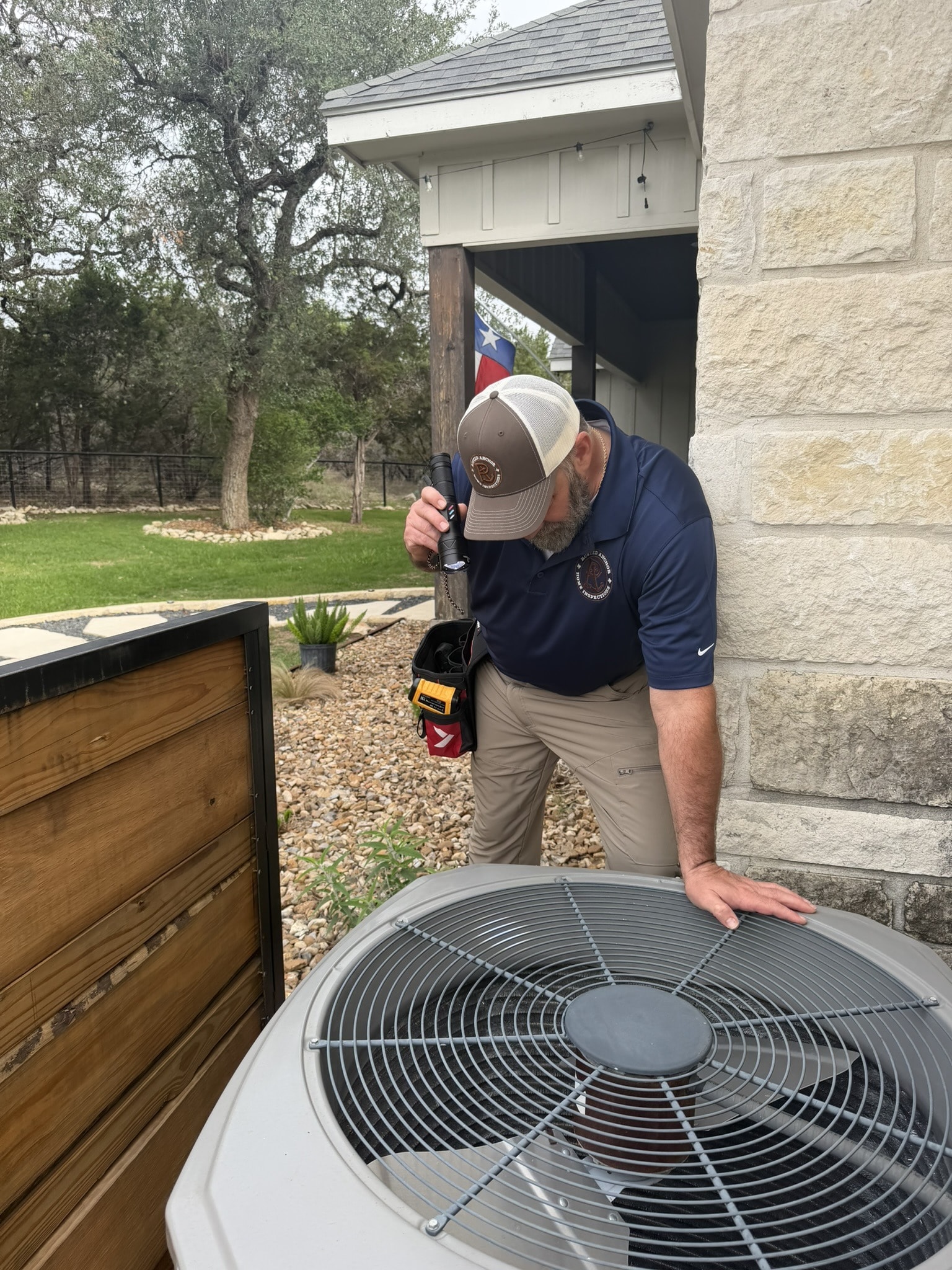
Quick answer: In Austin and San Antonio your air conditioner runs harder and longer than in most of the country, so a system that seems fine in March can struggle once the temperature climbs into the triple digits. During an inspection I check the cooling performance, the outdoor unit, the condensate drain, and the age of the equipment. If the AC is near the end of its life, you want to find out before you close, not during the first 100 degree week.
Most of the year here is cooling season. It is common to run the AC from March straight through October, and during a Hill Country summer the system barely gets a break. That kind of runtime wears parts out faster than the same unit would wear out in a cooler climate.
On top of the long season, attics in this part of Texas get brutally hot. A vented attic can sit well above 130 degrees on a summer afternoon. A lot of homes route their ductwork and even the air handler through that attic, so the equipment is fighting the heat from both sides. When I inspect a home in July or August, the AC is usually already telling me how it has been holding up.
An inspection is not the same as a full HVAC service, and I am clear about that with every client. What I do is run the system the way you would, look at the major components, and flag anything that points to a repair or a unit nearing the end of its run.
I measure the temperature of the air going into the return and the air coming out of a supply register. On a properly working system I expect a meaningful drop across the coil. A weak drop can point to low refrigerant, a dirty coil, or an aging compressor. It does not tell me the exact cause, but it tells me the system is not doing its job, which is what you care about.
I look at the condenser unit for bent fins, debris packed into the coil, and rust or damage. In Texas a lot of these units sit in full sun and collect grass clippings, leaves, and pollen, which chokes airflow and makes the system work harder. I also note the data plate so I can estimate the age.
This one causes more interior damage in Central Texas than people expect. The AC pulls humidity out of the air and that water has to drain somewhere. When the line clogs, water backs up and can stain ceilings, soak insulation, or rot framing. I check the primary drain, look for a secondary drain or pan, and watch for water stains under attic units.
I check the age of the equipment and the electrical at the disconnect. Capacitors and contactors are common failures in the heat, and a unit that is already 15 or more years old is something you should plan around. Knowing the age helps you budget for a replacement instead of getting caught off guard.
You do not need a meter to spot some of these. A system that runs constantly and still cannot hold the thermostat setting on a hot afternoon is working too hard. Loud or rough startups can point to a failing capacitor or compressor. Short cycling, where the unit clicks on and off in quick bursts, usually means something is off. Warm air from the registers when the system is calling for cool is the clearest sign of all. If I see these during an inspection, I write them up so you can have an HVAC contractor take a closer look.
A home inspection gives you a clear snapshot of how the system is performing the day I am there, plus the age and condition of the major parts. It does not predict the exact day a compressor will quit, and it is not a substitute for a licensed HVAC technician opening up the equipment and checking refrigerant pressures. What it does is help you walk into the purchase knowing whether the cooling system is a strength of the home or something you will be dealing with soon.
Yes, especially on an older system. A yearly service from a licensed HVAC contractor keeps the unit running efficiently through our long summers and catches small issues before they become a hot weekend without cooling.
I can check most of the components year round, but cooling performance is hard to judge accurately when it is cold out, because running the compressor in low temperatures can be misleading. If I inspect a home in a cold snap, I note that limitation in the report.
There is no hard cutoff, but many systems in this climate start showing their age past the 12 to 15 year mark because of how much they run. I always note the age so you can plan ahead.
It can. A backed up condensate line is one of the more common sources of ceiling and attic water damage I find in Central Texas homes. It is a cheap fix when caught early and an expensive one when ignored.
If you are buying or selling in Austin or San Antonio and want a clear read on the cooling system before the next heat wave, I can help. Call or text Rusted Anchor Home Inspections at (210) 997-8871, or email admin@hirustedanchor.com. We inspect homes across Austin, San Antonio, and the surrounding Hill Country, and you get a straightforward report you can actually use.
By Jeremy Wagner, Rusted Anchor Home Inspections
Serving Austin, San Antonio, and the Texas Hill Country. Veteran-owned, detail-driven, zero conflicts of interest.