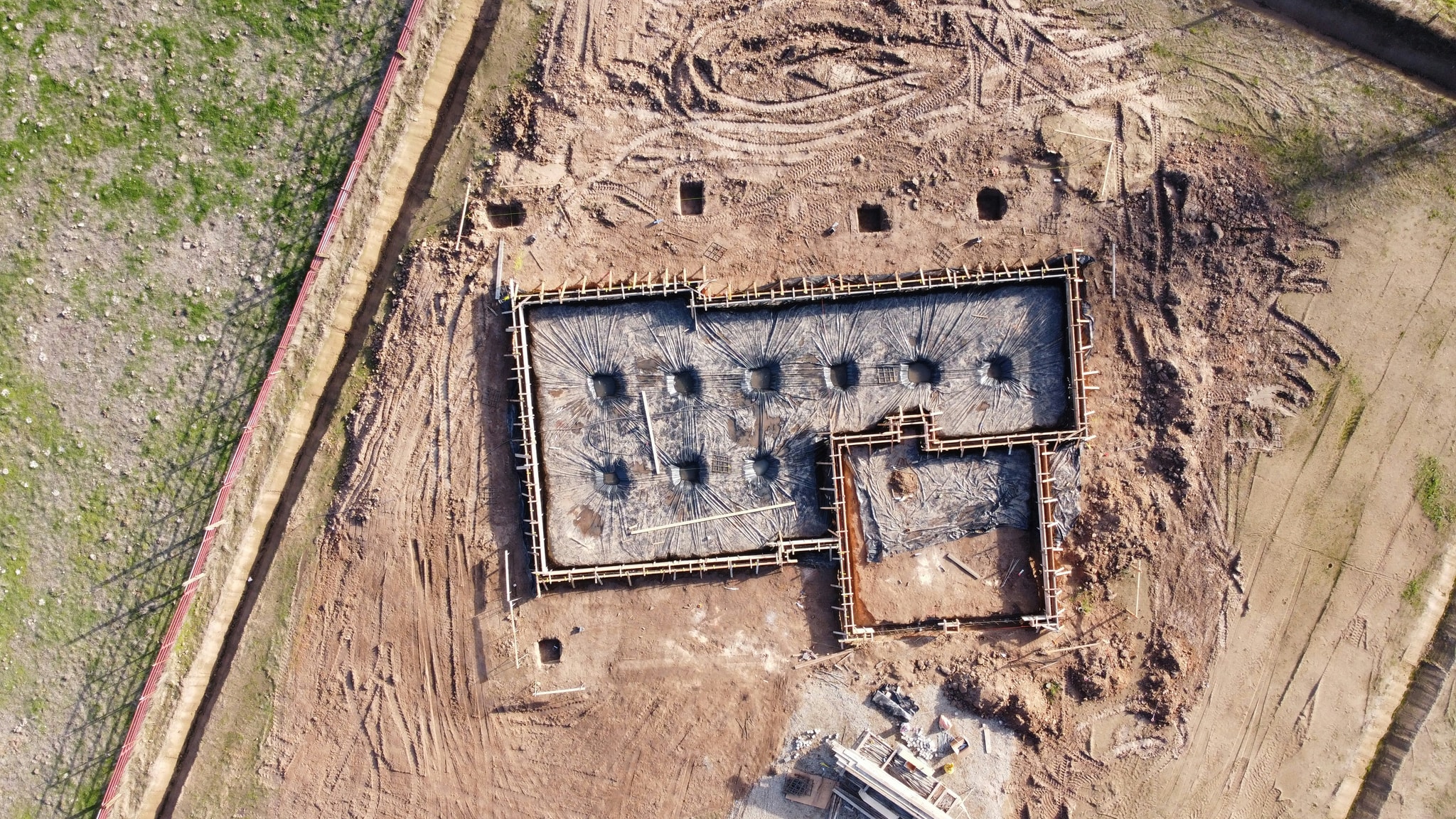
Quick answer: A lot of Central Texas sits on expansive clay soil that swells when it gets wet and shrinks when it dries out. That constant movement is the most common reason I find foundation issues in Austin and San Antonio homes. During an inspection I document the signs, then tell you honestly whether you are looking at normal cosmetic cracking or something that should go to a structural engineer.
Why foundations move so much here
The soil under most homes in this region is heavy with clay. Clay holds water like a sponge. After a wet stretch it expands and pushes up on whatever sits on top of it. During one of our long dry summers it pulls back and shrinks, and the ground drops away. A concrete slab riding on that soil gets pushed and pulled through every wet and dry cycle.
We get those cycles hard in Central Texas. A drought can bake the ground for months, then a few big storms soak it again. The bigger the swing between wet and dry, the more the soil moves, and the more stress it puts on a foundation. This is normal for the area, and it is why foundation movement is something every buyer here should understand.
What I look for during an inspection
I am not a structural engineer, and I am upfront about that. My job is to find and document the signs of movement so you can decide whether you need a deeper evaluation. I look inside and out, because the clues show up in both places.
Inside the home
I check the corners of doors and windows for drywall cracks, since those corners are where stress tends to show first. I look for doors that stick or no longer latch, gaps opening up where trim meets the wall or ceiling, cracked floor tile in a line, and floors that feel uneven when I walk them. One or two small cracks are common in any Texas home. A pattern of them in the same area tells a bigger story.
Outside the home
On the exterior I look at the brick or stone veneer for stair-step cracks running through the mortar joints, separation at the corners of the house, and gaps around the garage door frame. Where the foundation is visible, I look for cracks in the slab edge and signs that one part of the house has settled differently from another.
Drainage and trees
A huge amount of foundation trouble in this area comes down to water, or the lack of it, around the slab. I check how the ground slopes near the house, because soil should carry water away, not toward the foundation. I look at gutters and downspouts, and where they dump water. I also note large trees planted close to the house, since thirsty roots pull moisture out of the soil on one side and make the movement worse.
Cosmetic cracks versus structural concerns
This is the question every buyer asks, and it is a fair one. Hairline cracks in drywall, small cracks in a driveway, and minor separation at trim are common and usually cosmetic. What raises my concern is a combination of signs pointing the same direction. Sticking doors plus stair-step cracks in the brick plus a sloping floor in the same part of the house is a pattern, not a coincidence.
When I see that kind of pattern, I recommend a structural engineer. An engineer can take elevation readings across the slab and tell you how much it has moved and whether it needs repair. That is the right person to give you a repair plan, and my report points you there when the evidence calls for it.
How to protect a foundation in Central Texas
If you already own the home or you are about to, a few habits go a long way. During a drought, watering the soil around the foundation on a consistent schedule keeps the clay from shrinking away on one side. Keeping gutters clean and extending downspouts away from the house controls where rainwater goes. Grading the soil so it slopes away from the slab keeps water from pooling against it. None of this stops clay from being clay, but it reduces the size of the swings the foundation has to ride out.
Frequently asked questions
Do all homes in Austin and San Antonio have foundation problems?
No. Plenty of homes show only minor cosmetic movement after years on clay soil. The point of an inspection is to tell the difference between a home that has handled the soil well and one that is showing real stress.
Should I get a structural engineer for every home?
Not always. If my inspection finds a pattern that points to structural movement, I recommend one. If the signs are minor and cosmetic, I tell you that too, so you are not paying for an evaluation you do not need.
Does a slab foundation or pier and beam matter?
Both can move on expansive clay, and I inspect both. The signs differ a little, but the underlying cause, soil that swells and shrinks, is the same.
Can foundation movement come back after a repair?
It can, because the soil keeps moving. A good repair and steady drainage and watering habits go a long way toward keeping it stable. I always note any signs of past repair so you know the history.
Related reading
Schedule your inspection
Worried about a crack you spotted, or just want a clear read on a home before you buy? Call or text Rusted Anchor Home Inspections at (210) 997-8871, or email admin@hirustedanchor.com. We inspect homes across Austin, San Antonio, and the Hill Country, and we will tell you straight whether that foundation is solid or worth a closer look.
By Jeremy Wagner, Rusted Anchor Home Inspections